The Different Types of Home Heating Systems

Home Heating Systems

When the weather becomes colder, it’s easy to find yourself turning up the heat to keep your house warm. Choosing the correct type of home heating system will reduce your thermostat’s workload and help you save money on electricity. All heating systems have the same goal: to transfer heat to living spaces to maintain a warm and cozy ambiance.

Home Heating Systems

It can be difficult to ditch an old heating system and adapt to a new one that you are unfamiliar with. It can be interesting to see the range of heating technologies available as potential replacements if you have an older unit that needs to be replaced. All of these systems are available in a variety of models and sizes to suit your needs. Below we have listed different types of home heating systems.

1. Furnace

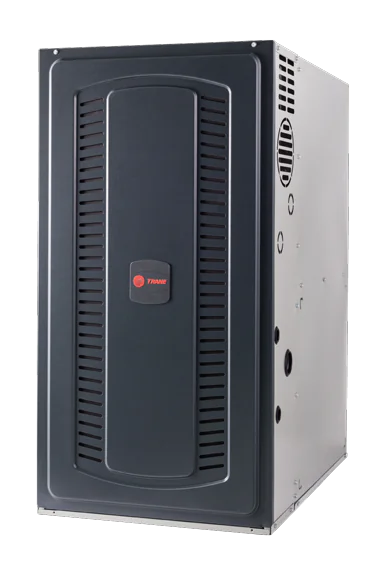
It is one of the most popular heating systems used for residential buildings. It uses hot air from a furnace and distributes it throughout the house via ducting. Additionally, it filters and humidifies the air. This mechanism can be a very cost-effective and practical alternative, as it takes up less space.  While furnaces can heat the air with electricity, propane, or oil, but natural gas is used in the majority of American houses. There are three types of furnaces based on fuel oil: gas furnaces, oil furnaces, and electric furnaces.

Fuel used:- Natural gas, propane, oil, or electricity are all options for fuel.

Advantage: Forced air furnaces provide both cooling and heating in a single unit.

Disadvantages: Gas furnaces have the potential to cause fires, explosions, and carbon monoxide poisoning.

2. Boiler

Traditional boilers and radiator systems can be found in older homes and apartments. They utilize a central boiler to circulate steam or water to radiator units throughout the house through pipes.

The hot water is heated in the boiler and then routed into baseboard units along the walls. Electricity or natural gas are used to power the boiler. The best thing is that this system is energy efficient and quiet. Homeowners can effortlessly regulate the temperature in their homes using this system. It’s important to keep in mind that raising the temperature takes time when heating with a boiler.

Fuel Used: Natural gas, propane, fuel oil, biodiesel blends, or electricity are all options for fuel.

Advantage: Provides pleasant heat without drying out the air as other heating systems do.

Disadvantage: Boiler systems cannot be combined with air conditioning for a year-round HVAC system.

3. Heat Pump

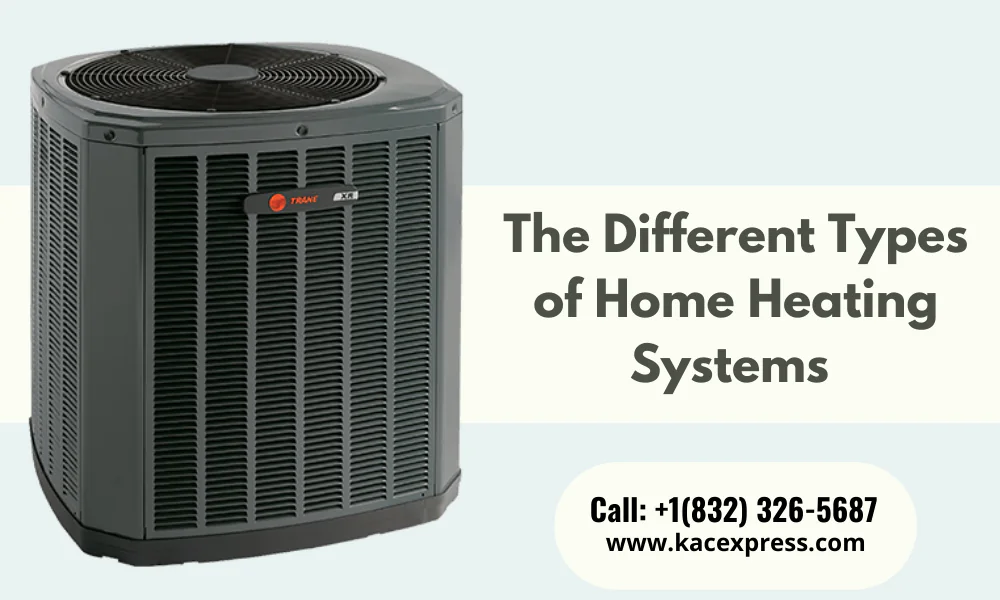
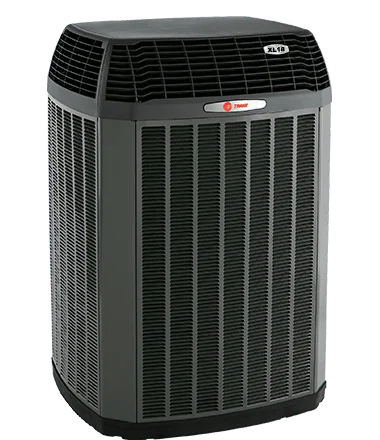
Heat pumps are the most recent advancement in home heating technology. They work similarly to air conditioners in that they take heat from the air and distribute it to the residence via an internal air handler. The mini-split or ductless heating system is a common heat pump system.

This system makes use of a small outdoor compressor and inside air handlers that can be positioned in various rooms throughout the home. Because they can be switched to air conditioning mode during the summer months, they can be a multipurpose investment.

Fuel used: It works using electricity or natural gas.

Advantage: Heat pumps do not require any ductwork which makes them cost-effective.

Disadvantage: These pumps are not effective when the temperature outside is too cold.

4. In-Floor Radiant

Radiant heating uses specific tubes in the floor to distribute hot water or electric heat. Oil, gas, propane, or electricity can all be used to generate heat.

While the radiant heating distribution system has a long lifespan, repairs might be costly if a problem emerges. The heat source system determines how long radiant heat lasts. When compared to other house heating systems, they are extremely quiet.

In-floor radiant systems are energy efficient and provide warm comfort to every inch of the house, even if they are slow to heat up and respond to temperature changes.

Fuel used: It can work using natural gas, propane, electricity, or solar systems.

Advantage: The system gives very steady and even heat across the entire living space.

Disadvantage: Maintenance of the radiant heating system is difficult because it is not easy to find out the hidden piping system. Sometimes you may need to tear down your floor to find the leaking pipes.

5. Electric Heaters

Electric heaters are easy to install and relatively inexpensive. They work using electricity. Due to the increasing price of electricity, electric heaters are hardly used as the major house heating system. They’re generally lightweight and portable, making them simple to move from one room to another. They also don’t have any moving parts, so they don’t need any ducting, air handlers, or other equipment to operate.

Electric heaters are a common choice in industrial heating applications because they offer advantages such as increased equipment life, safer operation, and system integration.

Fuel used: It works using electricity.

Advantage: Electric heaters are easy to use and can be set up easily at any location.

Disadvantage: They use a whole lot of power and might significantly boom power bills.

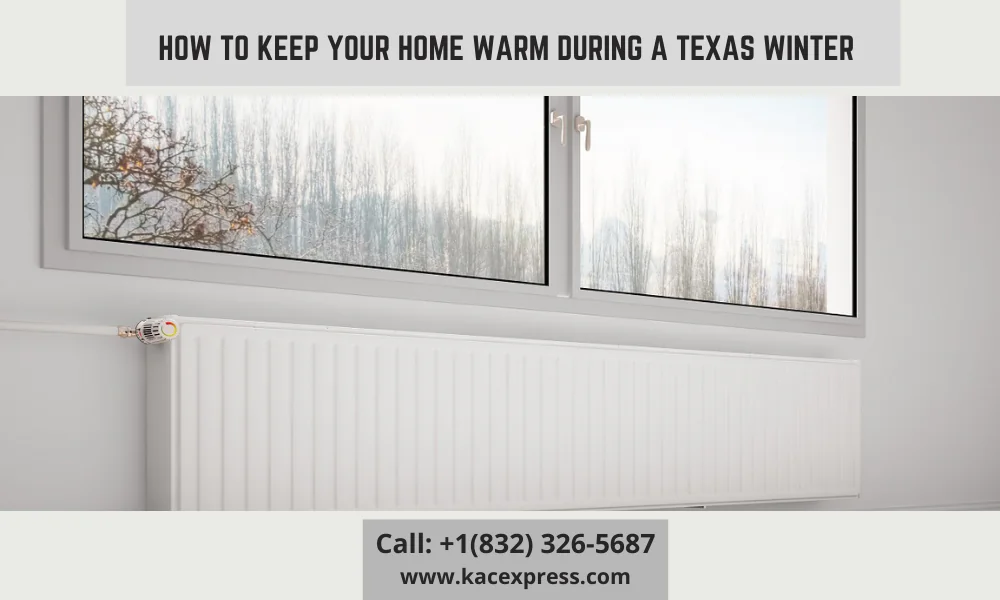
A hydronic or hot water baseboard heater distributes radiant heat in a room using hot water or, in certain cases, oil. These systems heat water that circulates through a series of water pipes to low-profile baseboard heating units using a central boiler. These are modern variants of the classic upright radiator. They promote heated air rise from the baseboard unit while directing cold air toward the unit for heating.

6. Baseboard Heater

The hot water is heated in the boiler and then routed into baseboard units along a wall. Electricity or natural gas are used to power the boiler. Homeowners can effortlessly control the temperature in their homes. It’s important to keep in mind that raising the temperature takes time.

Fuel used: Baseboard heaters can work using natural gas, propane, or electricity.

Advantage: These systems provide unique temperature control mechanisms.

Disadvantage: Radiators are slow to heat up and hot water structures cannot be blended with an air conditioning system.

7. Electric Space Heater

Electric heaters, often known as portable or plug-in space heaters, are a cost-effective option for homeowners who do not reside in cold regions. These are good temporary solutions that can give targeted and regulated heat in minutes after being connected to an electrical source.

Electric space heaters are oil-filled and work identically to a toaster in that they convert electric current straight into heat. Modern electric space heaters sometimes have cooling fans that can be operated on hot days, making them ideal for studio homes, home offices, or basements.

Fuel used: These systems work using electricity.

Advantage: These heating systems can heat the entire space very fast.

Disadvantage: Distribution of heated or cold air is limited as it comes from a single unit.

8. Active Solar Heating

Active solar heating, a more recent house heating system, uses solar energy to heat a fluid that is then sent directly into the interior space or stored for later use. Radiant heating systems, boilers, and heat pumps are commonly used to supplement these. Active solar heating systems, on the other hand, can use radiant floors that are finished, hot water baseboards, or a central forced-air system to transfer heat.

Fuel used: Solar energy.

Advantage: It’s an environmentally friendly technique of heating.

Disadvantage: Solar heating is still dependent on traditional heating systems to operate.

9.  Ductless Mini-Splits

Mini-split units eliminate the need for several air ducts, allowing you to establish multiple HVAC zones, each with its thermostat. This is especially useful in big homes and additions that don’t have ductwork.

Fuel used: It works using electricity or natural gas.

Advantage: No ductwork is needed

Disadvantage: When the climate is too cold, it is not efficient.

10. Fireplaces

Old methods are sometimes used for sentimental reasons rather than usefulness. Fireplaces, whether gas, wood, or electric, are excellent examples. They are most commonly used as part of a room’s décor, providing a warm glow but not acting as a heat source. Install a glass door and a chimney damper if you still like fireplaces as your primary heating source. This way you can control heat loss.

Fuel used: It works using wood, electricity, or gas.

Advantages: They provide an economic heating solution since they can work on wood as well.

Disadvantages: Compared to other heating systems, it won’t produce the same amount of heating power. In some cases, the fireplace will usually lose more heat than it produces.

Bottom Line

We hope that this post has guided you in exploring the various types of heating systems and determining the best solution for your home. Whatever system you choose, make sure you install and maintain it properly.

Ways to Reduce Your Heating Bill During Winter

Whether you own a home or rent, you want to keep your heating and air bill down so that you can put those savings towards other parts of your budget. Heating and cooling costs can be frustrating when they get high, and that’s why we’ve provided you with a quick list of ways to reduce your energy bill.

Seal Cracks in Windows and Doors

Don’t make your HVAC system work any harder than it has to. Go around your home and do an inspection to see if you’re losing air due to cracks in your windows and doors. These leaks can make your heating and air conditioning work much harder than it needs to, and this can cause future repairs to occur prematurely.

Invest in a Low-Efficiency Heater

A low-efficiency heater is going to be an excellent way to combat a high energy bill. Make sure that you get a heating and air installation from a professional to ensure that you get quality and reliable work performed. An HVAC unit is only going to work as good as the install, even if you’ve invested in durable brands.

Have Your Heater Serviced Before There Is a Problem

If you want to prevent the expenses that come with furnace repair, take the time to get service performed on a yearly basis. When you don’t address heating and air repair, then it can lead to bigger electric bills, and there is a good chance you won’t even notice right away when your bill creeps up. Having an expert come out before you need a heat pump repair will give you the best results on your bill and when keeping your system working in prime condition.

Be Aware of Temperature Settings

Even with the newest unit, you still need to mindful of temperature settings. When it gets extremely cold outside, then you’ll want to make sure everyone is setting the temperature to an appropriate level. While you might want it to be seventy-five degrees inside, that might lead to an unnecessary heating repair in the future. Talk to a specialist in heat & air repair so that you know how to accurately adjust your particular thermostat so that you can save money on your next energy bill, as well as save money in the future on repairs.

How to Keep Your Home Warm during a Texas Winter

Heating

How to keep house warm in winter- Homeowners can expect snow and freezing temperatures as the winter season arrives. If you are in Texas you do not have to worry about extreme cold, but it does not mean that you will not experience a cold day or night.

Winter is dark, damp, lengthy, and costly, at least when it comes to home heating. Every year, the cost of heating oil climbs, and electricity is not cheap. How can we save money and keep the house at a comfortable temperature? Below we have mentioned a few easy steps that can help you keep your humble home as warm as you want to have.

How to keep House Warm in Winter

1. Insulate Your Windows, Doors, and Attics

A window is a significant heat loss area in your house, with some estimates suggesting that 12 percent of all heat goes their way. Drafty windows, doors, and attics let cold air in and pull warm air out, whether you are in a new house or an older one. To keep the heat inside, it is essential to seal up any leaks. Start by testing the weather around your windows and doors, and if you find them too cold, seal the air leaks immediately.

2. Insulate Your Home

It may seem like a gimmick, but it’s far from that! A well-insulated home will help to keep your living room as cozy as possible, regardless of what time of year it may be! For example, insulation will help keep all of that precious warmth locked within your home when you have your heater on in the winter. Another advantage is that it can help reduce your heating (and cooling) costs by insulating your entire humble abode. As described before, insulation acts as a barrier and makes it nearly impossible for heat (or cold air) to escape.

3. Flush & insulate your water tank

Make sure your water heater works properly. These should be flushed thrice every year so that they are ready for use before winter starts. Save fuel by covering the water heater in an insulated blanket and setting the temperature to 120 degrees.

4. Thermostat

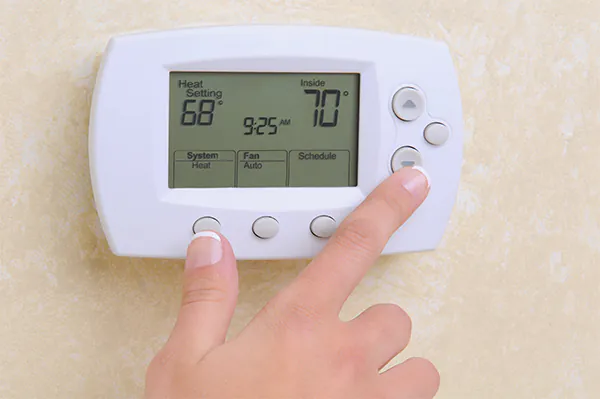
During the winter months, it’s tempting to set your thermostat at a comfortable 75 degrees, but this is a surefire way to increase your energy expenses. The lower the setting, the more savings you can have. It has been noticed that you can save around 15% in energy cost if you keep your thermostat at 68 degrees. You can still wear a sweater and slippers to stay warm if 68 degrees seems cold.

If the thermostat is set to 62 overnight, your energy bill will save you even more. And, if you’re out for a few days, turn the temperature down to 55; without the pipes freezing, this is the lowest setting you can use.

5. Fireplace

Fireplaces are excellent sources of heat and, in a matter of minutes, can warm a room. Snuggling up in front of a fire with a cup of hot cocoa and a good book is an excellent way to spend a cold winter evening as well. Fireplaces do, however, have their disadvantages.

A fireplace damper left open while not in use is an invitation for hot air to escape and cold air to get into your house. After each use, close the damper and, more importantly, open it before you light a fire, or smoke will fill your home.

6. Do a quick energy audit and check for air leaks

Fall is also a perfect time to consider a professional energy audit and check the seals for doors and windows. Hold a candle in front of possible drafts. You’ve got an air leak if the flame wavers. Seal a leaking door inside the doorframe by adding foam or felt weather stripping. Covering the windows with plastic is an inexpensive way to block out draughts if you do not have double pane windows.

7. Ceiling Fans

High ceilings are fantastic, but when the warm air rises to the top of the building, they will raise your heating bills. Adjust the blades’ direction if you have a ceiling fan; set it to force the air down along the walls by reversing the fan’s flow. It will heat the room more uniformly by circulating warm air back through the room and ease the effort your heater requires to keep the room at a comfortable temperature.

8. Upgrade Your Heating System

Has your existing method of heating seen better days? If so, the ideal time to upgrade to a new, powerful heater will be now! Modern heating systems have come a long way, just like technology; they will require fewer cycles to achieve and sustain the target temperature, they will be more environmentally efficient, and so much more.

9. Insulating the Roof

Foam, fiberglass, or wool insulation should be built inside, and rigid insulation boards should be installed over the rafters to insulate the actual roof, the most critical heat loss point in winter.

As it’s a pretty big job, we highly suggest having an insulation expert to make sure it’s done correctly.

10. Tips to Keep the House Warm Without Heat

  • Seal Off Drafty Rooms

It is not just weatherproofing your front door that will keep your home warm and cozy in the winter months. It will prevent warm air from wandering into unheated rooms by installing weather stripping around doors and using draught excluders underneath doors.

  • Electric Blankets

Your eyes feel heavy, and you’re ready to sleep. It’s been a long day. Then, you’re greeted by cruelly cold sheets when you get under the covers. To the rescue, electric blankets! It will build the coziest cradle to rock you to sleep by simply switching the blanket on for 10 minutes before you go to bed.

  • Wrap up Warm

Perhaps the most obvious addition to this list, wrapping up warm will be sure to increase those coziness levels. Crucially, rather than just thicker clothing, these are the layers you want to wear. It is because the air that is trapped within the clothing layers acts as thermal insulation.

When Should I Replace My Heating Unit?

Replace Heating Unit

Your most pricey asset, your HVAC system, is responsible for the comfort of your home. It keeps you warm in the cold winters so that you can live in comfort inside your house. Because heating units are one of the most significant investments we make in our homes, it’s only logical that we want to get the most out of them. Unfortunately, no matter how well-maintained your HVAC system is, it will eventually need to be replaced. Homeowners may experience concerns such as rising energy bills or poor indoor air quality as a result of an old or damaged HVAC system. Not sure if it’s time to replace your heating unit? Here are a few signs that your HVAC system needs to be replaced.

Replace Heating Unit

Your HVAC System Is More Than 10 Years Old

The heating system’s average lifespan is between 15 to 25 years, depending on a variety of conditions. If your system is more than 15 years old, it may seem to be working but in fact, it is likely to have grown far less efficient, potentially costing you a significant amount of money.

Many modern systems, such as those sold by Carrier, are significantly more energy-efficient. As systems age, they begin to show signs of wear and tear. The more a heating and cooling system is used, the faster it ages. Replacement becomes the more cost-effective alternative after a certain point because you’ll save money on repairs, maintenance, and energy costs.

Your Energy Bills Are Higher Than Normal

When you need more heat than usual, you should expect a minor increase in your energy expenditures. Heating systems lose efficiency as they get older. This is particularly problematic for individuals who do not have their systems serviced once or twice a year. While your energy prices will fluctuate with the seasons, bills from the same month in consecutive years should be fairly consistent. If you find a sudden increase in energy bills then it could be a sign of an old, faulty, or poorly maintained heating system.

Regular maintenance will extend the life of your air conditioning system and ensure that it runs as efficiently as possible, but an update will be required at some point. Upgrading to a high-efficiency air conditioner can save you up to 20% on your electricity bills.

Your Heating System Needs Frequent Repairs

It may be time to replace your heating system if it’s frequently asking for repairs. An outdated system that has to be repaired is most likely becoming inefficient. And, if you haven’t already noticed, your energy bills will begin to rise. If your heating system breaks, the cost of repair will tell you whether it’s cost-effective to replace it. Experts advise moving forward with a replacement if the repair costs half or more than a new unit.

The idea is that more extensive repairs usually indicate a machine that is nearing the end of its useful life. It’s not a good use of time, money, or energy to pay half or more of the cost of an HVAC replacement.

Heating Effectiveness

Your heating system will not successfully heat your home if it is not operating at peak efficiency. If some rooms in your residence aren’t heating at the temperature you set, it’s a sign you have an inefficient heater. Older systems may have trouble heating your entire home. Irregular heating is a clear sign that your heating system is inefficient to heat your room and you may need a new heating system. If your system is approaching 15 years old, it may be preferable to replace it with a new, more efficient system than suffer through years of misery.

Strange Noises

When heating systems become older, they may start with squealing, rattling, or banging noises. When a system is properly configured, it will run silently. A squealing noise could be a sign that the motor bearings are failing. The motor or the blower assembly could be causing the banging or rattling noise. When the fan turns on with a lot of rattling, it indicates that the motor is failing. Any strange noises could indicate that the system needs to be replaced.

You Notice an Increase in Dust Around Your Home

A heating system is designed to circulate air hot air in your home. Your HVAC system will filter out a lot of the dust and allergens in the air this way. If you see more dust around your house, it’s a sign that your HVAC system isn’t properly ventilating and filtering the air. The first step is to determine whether or not the air filters need to be replaced or cleaned. However, if this does not resolve the issue, your unit may no longer be able to function properly.

Your Air Conditioner, Furnace, or Boiler is Running a Lot

If your heating system seems to be running more than usual, it could be a clue that it needs to be replaced. A heating unit that is continually working will be the largest energy consumer in your home, so keep an eye on how often it runs.

Thermostat needs to be adjusted regularly

If you can’t manage to get the thermostat set to a suitable temperature in your rooms, your furnace may be the reason. If some rooms are hot and others are cold, the furnace may not be properly spreading the air. It may be time for a new heating system if the temperature in your home changes by several degrees from room to room.

Short Cycling

The temperature in your home is controlled by thermostats. Short cycling is when your heating system turns on and off for short periods. It’s caused by the heat exchanger overheating and shutting off the system. Short cycling reduces the efficiency of your heating system and could indicate that something is significantly wrong with it.

Wrapping up!

Heating systems are much needed in winters. If you’re having any of these issues, it’s probably time to replace your old furnace. An energy-efficient heating system will save you money while also ensuring that your home is safe and healthy.

Interesting Facts You Didn’t Know About Your Heating System

Heating System

Most of us don’t give our heating systems a second thought until they stop working. However, with appropriate maintenance and knowledge of your system, it can keep your family happy and comfortable for many more winters.

Learning more about how to maintain your heating system working properly is one of the greatest methods to do so. Plus, heating systems are incredible technological marvels that can surprise you when you learn more about them. So, here are some of the most interesting facts about your heating system that you probably didn’t know about.

Heating System

1. Romans used heating system first

The Romans were the first to use a hypocaust, a type of heating system. It functioned by transferring furnace heat through the floors and walls of the homes. Unfortunately, this advanced technology was only available to the affluent and upper-class Romans who were rich. Only stone or brick homes could employ it, and it was extremely risky due to the risk of fire or suffocation. Thankfully, today’s furnaces are safer to operate in the house. Monks who followed the Romans used furnaces to heat flowing rivers to keep their monasteries warm.

2. Furnace can last for 15 to 40 years

The lifespan of your furnace might range from 15 to 40 years, depending on the sort of heating system you have and how well you maintain it. At the very least, it’ll be one system in your home that you won’t have to worry about often updating; just make sure you receive the appropriate maintenance regularly for your heating system.

If you’re thinking of replacing your old furnace, make sure to consider the new unit’s lifespan as well as the annual savings. Although high-efficiency units might not last as long as traditional units, they can save you money on power bills.

3. Home heaters consume a lot of energy

One of your home’s largest energy consumers is the heating system. Home heaters in Texas often consume 50-60% of a home’s overall energy consumption. Even the most energy-efficient house heaters consume a significant amount of power. Furthermore, if your home heating system is not effectively maintained, it might consume even more energy. As a result, having your heating system maintained by us is always a good idea.

4. Home heater can be eco-friendly, too

Home heaters, as mentioned above, are one of your home’s top energy consumers, but there is one form of home heater that isn’t: geothermal heaters. A geothermal heater uses the ground’s geothermal electricity to keep your home warm, making it one of the most environmentally friendly heating systems available.

5. Furnaces are the most common heat source in American homes

Furnaces heat a building by circulating conditioned air through ducts in the floor, walls, and ceiling. They can run on gas, electricity, oil, or a combination of these fuels; natural gas furnaces are the most popular because they’re the most cost-effective.

6. Cranking your thermostat won’t heat your home faster

One of the most common home heating myths is that if you turn your thermostat up, your house will heat up quicker. The truth is that no matter how much you turn the thermostat, your home will continue to warm at a consistent rate. When you raise the thermostat, your furnace has to work more, which reduces its efficiency.

7. The government regulates the installation of your furnace

This applies to both the state and federal governments. While furnace safety has improved dramatically since the ancient Romans used them, there is still an element of risk. If not installed or maintained correctly, it can lead to a variety of issues, including a fire caused by a defective burner.

This is why, rather than attempting to install a new furnace yourself, you should always hire an experienced professional. Not only can the unit’s lifespan be shortened, but it might also cause unnecessary complications throughout its use.

8. The AFUE Rating

Annual fuel utilization efficiency (AFUE) is a long-winded way of describing energy to heat ratio. The greater the AFUE rating, the more natural gas heat is extracted and enjoyed by your household.

So, when you’re looking for a new furnace system and see AFUE rates above 90, consider them as a ratio. An AFUE of 90 indicates that 90% of the gas burnt is converted to heat that can be utilized by your home. The AFUE ratings of furnaces improve as they become more efficient, resulting in lower heating bills and increased comfort. Isn’t it cool?

9. Maintenance Is Necessary

Our industry has a widespread misperception that maintenance is an optional service. Too many individuals purchase new furnaces and then browse about for a maintenance plan for a few years before ever having their system serviced. Maintenance is necessary not just to avoid repairs and maintain high-efficiency levels, but it is also necessary for your system’s safety.

10. How Efficient Is A Boiler?

Boiler systems can be around 90% efficient, which is somewhat less than gas-fired furnaces, which can be over 95% efficient. Boilers, on the other hand, are incredibly efficient since they allow you to manage temperatures from room to room! This implies that rather than paying to have your entire house heated at the same temperature, you may keep other areas cooler and only keep your bedroom warm at night.

It can be difficult to stay comfortable in both the summer and the winter. Fortunately, we have modern, efficient environmental systems in place, such as the most up-to-date high-efficiency boilers. And as long as they perform their job, no matter how cold it gets, we’ll be fine.

Why Is It Never a Good Idea to Wait for Repairs?

We understand how inconvenient it can be to schedule professional service for your heater every year. But, believe us when we say that having to maintain your system regularly is significantly more inconvenient. Worse, the longer you try to go without maintenance, the more expensive and frequent repairs will become. Instead, scheduling heating maintenance on an annual basis is easier and more cost-effective.

Reasons Why Maintenance Is Important?

Let’s take a closer look at why yearly heater maintenance is so crucial. Here are four reasons why you should never neglect a tune-up.

1. Maintenance reduces repair needs

We touched on it briefly earlier, but let us elaborate. Small faults, such as a dirty filter or a loose screw, are addressed by maintenance services while they are still minor. This prevents them from escalating into full-fledged repair difficulties, which could result in more damage to your heater.

2. Maintenance keeps your home warm and safe

Annual tune-ups, whether you have a furnace or a heat pump, can guarantee that your heater runs safely and efficiently while lowering the risk of problems.

3. Maintenance improves energy efficiency

When you plan maintenance once a year, you’ll avoid the regular loss in energy efficiency that your heater would experience if you didn’t. This means that instead of losing a proportion of its efficiency, your system maintains a higher degree of energy efficiency.

4. Maintenance helps keep energy bills low

Who doesn’t want to save money on their bills? With fewer niggles in your heating system obstructing the heating process and pushing your system to work harder, your heater won’t need to spend as much energy to complete the task. This implies there will be no unexpected increases in your monthly expenses. Instead, you may look forward to a bill that is predictable and cheap.

When to get your heating system serviced?

When your heater and air conditioner are working fine, it’s easy to overlook them, but once something breaks, you’ll certainly regret not keeping up with maintenance. After all, if something goes wrong, you can end up with a repair that takes more time and costs more than routine maintenance. As the weather begins to cool, fall is the time to inspect your heating system.

The best time to think about performing your heating maintenance is before you want to utilize it.  Don’t wait until the first cold morning to realize you haven’t had your heating system serviced yet.  Preventative maintenance can save money on repairs for larger components by catching issues before they become serious during normal maintenance.

While your system may appear to be in good working order, a technician may discover a problem that would only worsen if left unattended. Experts can detect and solve faults straight immediately with preventative maintenance.

Fixing minor issues can keep your heating system functioning efficiently and prevent future breakdowns. You might save thousands of dollars in repair costs and electricity with appropriate heating system maintenance.

10 Ways to Keep Heating Bills Down This Winter

The days are becoming shorter, the air is getting colder, and the leaves are changing color, all of which are obvious signs that winter is near. As the winter’s approaching, you may find yourself spending more time indoors. As the evenings grow darker, you’ll be turning on the lights earlier and turning your heaters on. You could be one of the millions of individuals who still work from home, relying on extra electricity to keep your laptop running and the kettle boiling all day.

All of this, along with growing energy costs, means you’ll be using more energy, which will increase both your carbon footprint and your energy bill.

There are several things you can do to minimize the cost of heating bills down in your home, enhance the efficiency of your heating system, and save money on heating. It’s good to know what factors influence your monthly heating expenses and what alternatives you have for lowering your energy bills.

1. Weatherstrip your doors and windows

Sealing out leaks is a smart place to start if you want to save money on your power bill this winter. Your doors and windows may leak more heat than you think, but adding weather stripping around them can help. Door sweeps also help to seal the gap between your door’s bottom and the door frame.

In addition to securing your home’s windows, you should also inspect each door for leaks. Apply weather strips to any spots from where cold air is entering your home. Weatherstripping keeps the cold winter air out and the warm air in.

2. Switch to a smart thermostat

Your heating expenditures can be drastically reduced by adjusting your thermostat. Lowering the thermostat by up to ten degrees can save you up to 15 percent on heating costs each year.

Bedtime and just before you leave for work are two of the ideal times to lower your thermostat. Try sleeping in a room with a temperature of 63 degrees Fahrenheit. As long as no one will be home during the day, you can wish to turn down the thermostat to 63 degrees or even lower when you leave for work.

3. Have a regular service performed on your system

Would you drive your automobile for years without having it serviced regularly? So, why would you do such a thing to your heating system?! Regular maintenance will guarantee that your system functions efficiently, lowering your energy expenditures once the cold weather arrives. Because your system should last at least ten years, ensuring that it isn’t wasting energy can save you thousands of dollars during its lifetime. This will also extend the life of your system and prevent costly repairs and breakdowns.

4. Upgrade your boiler

If your boiler is more than ten years old, it’s probably time to upgrade to a newer, more efficient type. You may save up to $700 by replacing your old boiler with a new A-rated condensing boiler, which consumes less energy to produce the same amount of heat. Plus, if it’s brand new, you’re less likely to have any problems as the winter season approaches.

5. Check the insulation in your house

Insulation might help you save money on your electric bill in the winter. Insulating your attic is a wonderful place to start because it allows you to store more heat in your living areas. Another common way for heat to escape is via your walls, particularly at electrical outlets and other points where pipes enter your property. Pay special attention to the tilework and piping to prevent heat from escaping and to keep pipes from freezing.

6. Only wash/dry full loads of laundry

One of the most basic energy-saving laundry suggestions is to run full loads whenever possible. Running a small, half load of laundry uses the same amount of energy as a full load. With several loads, you’ll finish up using more energy and water. A better strategy is to just run your machine when it is fully loaded. You’ll use less hot water and run your washer and dryer less frequently. This can result in cost savings.

7. Upgrade your heating controls

Heating and hot water account for more than half of a typical household’s energy cost. Without replacing your boiler, you can upgrade or install heating controls. It’s especially important to consider this if your controls are older than 14 years.

Installing a room thermostat, a programmer, and thermostatic radiator valves, as well as effectively utilizing these controls, might help you save roughly $150 per year.

Installing a smart meter can also help you save energy by informing you how much energy you’re using.

8. LAYER UP

Put on a warm sweater or dressing gown before turning on the heater and notice how you feel. In the cold, it’s advisable to dress in multiple thin layers. This insulates you and makes it easy to add or remove garments as the temperature changes.

It’s also a good idea to use heat-retaining fabrics like wool and fleece. Also, wear socks or slippers to keep your feet warm, as this will help your entire body retain heat.

9. Use Ceiling Fans

Use a ceiling fan to distribute warm air throughout your home and save money on your heating cost during the cold months of the year. During the winter, reverse the fans so that the blades turn clockwise. At the base of the fan, there should be a little switch.

The blades should rotate clockwise to pull air upward, allowing warm air trapped near the ceiling to move down the walls and around the room. Stand beneath the fan to check if the blades are whirling in the right direction. There shouldn’t be any air blowing down on you.

10. Get an Energy Audit

A home energy audit will show you where you are losing heat in your home and will tell you exactly what you need to do to lower your energy expenses. While you can perform an energy audit on your own, it may be more cost-effective to employ an expert to do it for you. An expert would generally have more tools and equipment to acquire a better understanding of your home’s specific areas of concern. They may also be able to implement energy-saving solutions right after the audit. If you’re unsure who to hire for an energy audit, your local electric company can make a recommendation.

Most Common Heating Repairs

Heating Repairs

The weather is cooling down, and residents across the country are turning up their heating systems. Unfortunately, turning on the heat and running the furnace can reveal problems you weren’t aware of previously. Don’t get too worked up if your furnace breaks out. Instead of replacing it, you might be able to repair it. Repairing a broken furnace is far less expensive than purchasing a new one. A new furnace costs between $2,700 and $6,800 on average, depending on numerous criteria, although furnace repairs are generally only a few hundred dollars.

Heating Repairs

With winter storms on the way, it’s critical to have your furnace up and operating properly so you don’t have any major problems during the season. Nothing is more unpleasant than a broken furnace in the middle of a snowfall. In this article, we will go through the most common heating repairs.

1. Your Heating System Won’t Turn Off

If your heating system continues to run and blow hot air, first double-check that it is set to “auto” rather than “on.” Your heating system will turn off when it reaches the set temperature if you set it to “auto.”

If it still runs after you’ve done this, your thermostat may be damaged or wired incorrectly. It could be a problem with the blower in your heating system. The first step is to double-check that the thermostat’s wiring is properly connected, then reset it to the manufacturer’s settings to see how the system operates. If this doesn’t work, it means your thermostat has to be replaced.

If the problem is with the blower, you should call a heating repair specialist to diagnose and fix it.

2. Areas of Your House Aren’t Heating Properly

If your home isn’t evenly heated throughout, it could be due to a dirty air filter, faulty ductwork, or problems with the heating system’s fan motor, bearings, or belts. It’s simple to replace your air filter, but if you have issues with your ductwork or system, you should contact a heating repair professional.

3. Cool Air Is Coming Out of the Vents

Whether you have a heat pump or a furnace, your home’s central heating system distributes heat through a network of connected air ducts. Although leaking ducts may alter the temperature of the air flowing from your vents, you should first address a couple of quick fixes.

Thermostat – First, double-check that the thermostat is set to the correct temperature. If you did, try raising it a notch to see if you can detect a temperature difference. Furthermore, rather than “fan on,” the thermostat should be set to “auto,” as the fan will just blow non-heated air. If everything is fine then you should go on to the air filter.

Air Filter – Because air filters collect a lot of dirt and dust, they should be changed every one to three months. As a result, your heating system may have a harder time performing effectively, which could be why it’s spewing cool air.

Pilot Light – Check your heating system’s pilot light to determine if it’s turned on. It’s possible that there isn’t any gas flowing to it if it isn’t turned on. This could be the issue if the gas valve is turned off. Otherwise, you should consult with a heating system expert to diagnose the issue.

Fuel – Whether you have an electric, gas, or oil heating system, it requires adequate power to function effectively and will not work if it does not have sufficient fuel.

Leaky ducts – As previously said, leaky ducts could be the source of the problem. Turning on your fan and then walking up to your crawl space or attic is an easy way to check. Feel for any blowing air by walking along with your ducting. If nothing appears to be wrong, gently light a piece of incense and hold it near one of the junction point joints (do this for each) to check if the smoke drifts away from the ducting, suggesting a leak.

4. Your Heating System Won’t Light Or Stay Lit

If your heater is modern, it is likely to have electrical ignition and an intermittent pilot light instead of a standing pilot light. The sensors that ensure that gas does not flow when the heater is turned off become dirty over time and must be cleaned or replaced.

5. The Thermostat Controls Aren’t Working

If you’re having trouble setting the temperature or changing the system controls, it’s possible that your thermostat is to blame. Follow the above-mentioned troubleshooting steps. Then, if your thermostat is digital, replace the batteries. If none of those options work, you can try resetting it to factory defaults again.

If that doesn’t work, look for a tripped circuit that could be the source of the problem. If you can’t find the reason then we recommend you contact an experienced HVAC expert.

6. Your Heating System’s Fan Isn’t Working

If the fan on your heating system isn’t operating, check the thermostat to see if it’s set to the correct temperature. Next, check your air filter to make sure it’s not clogged; a clogged air filter can cause your fan to stop working.

Finally, make sure your circuit breakers are turned on; if they aren’t, turn them on; however, don’t turn them on and off continuously, as this could trigger an electrical fire. Contact a qualified heating system technician if none of these troubleshooting options work.

7. There’s Mold in Your Heating System

Because Texas has a humid environment, moisture buildup in your home’s heating system can be a problem, especially if you have poor insulation or broken ducting. Mold can grow in your heating system if this is the case.

The best answer is to have a qualified Texas heating system professional clean your system and, if necessary, properly insulate and seal your ducts to prevent moisture from accumulating.

As previously said, changing your air filters every one to three months and having your air ducts professionally cleaned every few years are also recommended.

8. There’s a Burning Smell Coming From Your Heating System

There could be a burning smell when you switch on your heating system for the first time in the winter because the heating system is burning away any dust and debris that has gathered since the last time you used it.

The odor could be caused by a filthy air filter, but it could also indicate a more serious issue. If the odor persists, turn off and unplug your heating equipment as soon as possible. Clean any dust or debris that has gathered after unplugging it, and change your air filter if necessary.

If this does not resolve the issue, you should seek the assistance of a heating repair expert.

9. Your Energy Bills Are Running High

Heat pumps, rather than furnaces, are used by many Floridians, and energy bills can skyrocket during the winter due to a variety of minor concerns, such as a filthy air filter or a tripped circuit. However, there’s a chance the issue is more serious, such as a faulty compressor or a refrigerant leak. If troubleshooting the previous problems doesn’t solve the problem, you should seek the help of a heating repair expert.

10. Not Maintaining Your Heating System

Maintenance of your heating system is sometimes overlooked, but if it isn’t done regularly, problems such as higher energy bills and premature repairs might develop. Scheduling a heating system service will guarantee that any minor concerns are addressed before they become major issues.

11. Heating equipment needs frequent repairs lately

While you may be used to ordering maintenance for appliances throughout your home regularly, a system that requires far more repairs than in previous years could indicate a failing furnace. Here are a few reasons why your heating system could need more work this year:

  • Failure to keep up with routine maintenance – Annual expert tune-ups are required to inspect components for damages, clean the interior of the system, and look for serious issues such as heat exchanger cracks. Filters should be replaced regularly, and homeowners should be aware of any new problems that may arise. If you don’t maintain your furnace, it may develop other emergency issues. Schedule professional furnace and air conditioner tune-ups in the fall and spring, respectively.
  • A new furnace is required – Furnaces, like all other home appliances, have a limited lifespan. Heat pumps last roughly 12 years on average, while traditional furnaces endure between 15 and 20 years. In the last two years of your furnace’s life, breakdowns are substantially more prevalent. Take persistent issues as an indication that you may need a new heating system soon and seek professional advice.

OTHER FURNACE ISSUES

If you hear loud banging noises inside your vents, a screw, nut, bolt, or other pieces of equipment may have fallen free. Noises can also be caused by a filthy filter or a filter that is installed incorrectly, which commonly occurs when the system is turned on and off.

Dusty, dirty coils, and other systems in your furnace can, believe it or not, cause major problems. Dust accumulation can cause your heating system to work overtime, resulting in increased monthly energy expenditures.

The benefits of routine furnace tune-ups

A skilled HVAC technician can detect furnace issues early on, saving you money and avoiding chilly nights at home. While a furnace problem is a good reason to bring in the specialists, furnace tune-ups and inspections have several other benefits, including:

  • When you keep your furnace in good working order, it uses less energy and lowers your monthly heating expenses.
  • Regular furnace tune-ups from a professional HVAC technician will help you maintain vital components while also extending the life of your heating system (and reducing the chance of permanent damage).
  • During your furnace tune-up service, your HVAC professional will detect and repair any small faults that are identified. They’ll also take care of any major issues, such as heating system repairs or replacement.
  • House fires and other hazards, such as toxic gas fumes or even deadly carbon monoxide leaks, can be avoided with routine maintenance.

Taking care of your furnace between tune-ups

Follow these tips to keep your furnace functioning smoothly in between professional furnace tune-ups.

  • Maintain the lubrication of your blower motor bearings throughout the season. If your heating system has oil cups, you should lubricate them once a year with around 3 drops of oil. (However, many new motors come with permanently sealed bearings that don’t require oiling.)
  • Check your blower unit regularly for dirt and clean it out. Vacuuming the furnace regularly can help with this. Make sure the circuit breaker is turned off before proceeding.
  • Along with cleaning your furnace, you should check for air leaks in any exposed ducting joints. Holding a burning stick of incense to the joints while the furnace is operating is one method for doing so. You should be able to follow the smoke to the source of any leaks. When you find them, use metal tape to seal the areas.
  • Another thing you may do is double-check the accuracy of your thermostat. Place an outdoor thermometer next to the thermostat on the wall. Run the furnace for a few minutes, then check the thermometer’s reading against the room temperature. Schedule an appointment with one of our licensed HVAC technicians or contact your technician at your next tune-up appointment if you detect any anomalies.

Preventing the Most Common Heating Problems

While many heating issues are caused by an old, inefficient system, others are simple to avoid. Professional home heating system maintenance can help you avoid emergency system failures by reducing the wear and tear your system experiences while it runs throughout the winter. Heating pumps require two annual tune-ups because they heat and cool your home. Furnace tune-ups should be performed once a year. Fall is an excellent time to perform routine maintenance, but don’t worry if you missed your window. Even in the cold, having an HVAC professional do preventative maintenance can help you avoid issues.

How Often Does My Heater Need To Be Inspected?

Heater_Inspected

Your heater is critical to your home’s comfort and security. Every home must be prepared to withstand the freezing temperatures of the winter months. Your heater, like any other home appliance, has to be serviced regularly.

Temperatures will soon drop below zero degrees as October kicks into full gear and winter approaches. That implies it’s time to turn up the heat. It won’t be long before we’re running our heaters nonstop to keep our houses warm.

Heater_Inspected

It’s a good idea to have your heater inspected if you haven’t done so recently, especially if you’ll be relying on it heavily. You don’t want it to break down on you in the middle of a cold spell. You never know when a furnace will break down due to a problem that could have been detected and addressed with routine maintenance.

Today, we’re here to help with more than a few tips on how often does your heater need to be inspected?

How Often Should Your Heater Be Inspected?

  • Twice a Year
  • Annually
  • Every 2-5 Years
  • Break-Fix Repairs

How often should your home’s heater be inspected? It is based on several factors. If your home uses a lot of heat, relies heavily on the heat in the winter, or has a sensitive heater design, you should get it inspected every six months.  This will make sure that your heater is inspected well on time so that it does not break when needed most.

We would propose annual heater inspections for the majority of folks in the early autumn or late spring. Annual heater checks ensure that your heater remains in good working order from year to year and that you never go more than a year without detecting a hidden issue.

Climate and Importance of the Heater

Climate has an impact on how often your heater has to be inspected. During the colder months of the year, the quantity of use, stress, and importance of your heater.

1.Cold Winters: Inspect Every 6-12 Months

Heaters are a necessary piece of household equipment in areas where it snows inches to feet every year and where yearly winter storms are normal. You should get your heater tested at least once a year, if not twice a year, to ensure that it is in good working order whenever you need it.

2. Mild Winters: Inspect Annually

Even though there is frost every winter, the heater is still necessary to keep the family safe throughout the seasonal cold. An annual inspection and maintenance are required for furnaces, gas heaters, and boilers, which are common in these areas. This guarantees that your heater is in good working order and ready to use again. Small faults, such as a clogged flue or a faulty seal, might endanger the entire house.

Every year, an annual check guarantees that your heater is safe to use whenever you require it.3. 

3. No Winter: Inspect Every 2-5 Years

Homes in warm climates with minimal winter have been constructed to use less heating. Electric-only heaters are commonly found in household HVAC systems, yet they are rarely used throughout the year. You should arrange an examination every two to five years in these climates, whether you think you need it or not.

In this situation, the inspection guarantees that your filter is clean, your cables are in good working order, and there isn’t too much dust in the system before turning it on for the winter.

The Type of Heater in Your Home

Some heaters require more maintenance than others. Boilers, gas heaters, and furnaces may all be risky if not properly maintained, therefore they should be inspected regularly to ensure that they are still safe to use. Summer inactivity, as well as heavy use during the winter, can cause a heater to fall into disrepair.

Electric heaters require less maintenance because they do not use volatile ingredients, but they still need to be inspected regularly to remove dust, check fans, and ensure the wiring and elements inside are in good working order.

Seasonal Safe Maintenance

Before Switching the Heater Each Year

Do you know how every year when you turn on the heating for the first time, it smells like burning dust? That is the most minor issue that the initial heat-up can cause. In the first cold month of the year, clogged flues, gad and pilot light troubles, silt in your boiler, and frayed wires can all lead to tragedy.

Getting an examination before you use the heater for the first time is a good idea to assure your safety and that the heat will be available when you need it.

Before Shutting Down the Heater in Spring

At the end of each cold season, some types of heaters (particularly older heaters) need to be turned off and maintained. Your furnace may be cleaned, examined, and turned off for the summer, so it’ll be ready to use again next fall. Before sitting idle for months, boilers can be cleaned of debris and oil accumulation.

Make Use of a Warranty

Some heater installations come with guarantees, and some even come with discounted or free maintenance for the first few years. Make use of these services if your warranty allows them. HVAC professionals provide these services for a reason: to keep your equipment performing at its best.

Benefits of regular inspection

1. Prevent Future Breakdowns

When you get your heater inspected, you are getting a thorough examination of your entire system, ensuring that any little issues that have arisen are addressed before they become major problems and breakdowns in the future.

2. Prolong the Lifespan of Your Furnace

Heaters are a significant financial investment, and you’ll want to get the most out of it by keeping them running as long as possible. Regular inspections and skilled maintenance will ensure that your heater lasts as long as possible. A well-maintained heater can last 10 to fifteen years when used with care.

3. Save money on energy

Heaters are only second to HVAC systems in terms of annual energy use. Regular inspections, on the other hand, can help you save up to 10% on your energy costs. In addition, well-maintained heaters are less likely to experience problems, which are costly to repair or replace.


Signs That Your Heater Is in Trouble

As winter approaches, a broken heater is the last thing you need to worry about. Hope we had a small screen or video that could tell us exactly what’s wrong with our heating systems when they start showing signs of problems, with suggestions about fixing it, but sadly this is not possible. Make sure you’re not taken by surprise with a broken down heating system when you need it most in freezing weather. Below we have listed few signs when your heating needs some maintenance.

1. Your Heater Isn’t Keeping You Warm

When a heater fails to warm up, we usually assume it’s broken, and it is the first sign that indicates that your Heater is in trouble. Fortunately, this isn’t always the case since you might have encountered a power surge, and here we suggest testing the circuit breaker. You should also check if the Heater is connected to a power source and the thermostat is set correctly. If everything is fine, but still the Heater is not keeping you warm, then don’t sit indoors bundled up, either. Just call a professional technician from our team immediately.

2. Your heating bills are creeping up.

It’s a good sign that your HVAC system is failing if you encounter higher-than-normal energy bills. This applies to both air conditioning and heating. For instance, if your house is sufficiently warm during the winter, but your first utility bill is sky-high, that means your Heater is not working efficiently. If you want that your Heater works appropriately, then you should always schedule annual maintenance services.

3. Dramatic Changes in Room-to-Room Temperatures

A standard heating system provides consistent heat and temperature throughout the house. If you find that one room is hot and the other one is too cold, this may be due to your heating system’s failure, or it may be that your heating system is too small for your house’s air space. You may need to have your system tested by a professional if you notice your home is suffering from abrupt changes in temperature and unexpected draughts.

4. Weird Noises & Unusual Sounds

It shouldn’t create a massive amount of noise when a heating system is working correctly. It’s better to have it checked over if you’re hearing loud sounds coming from it. There are a variety of different causes that could make those odd noises, including:

Loose bearings, pulley problems, or deterioration in the inducer motor or blower motor belt may cause squealing.

A failing blower fan motor can cause disruptive humming.

The rattling noise may come from an unbalanced engine, loose screws, or ductwork that is unsecured.

The best way to eliminate such issues is to arrange scheduled maintenance services to keep them at bay. If you encounter these issues, make sure that you contact a specialist to prevent further exacerbating the problem at your earliest possible convenience.

5. Your Heater is too old.

Heaters usually do not last longer than 15 years—some last up to 20 years when proper maintenance and care is taken. If you do not know your heating system’s exact age, it’s best to find out before winter. Many devices have an actual date of implementation somewhere on them. Some have code on them that shows when the parts were made. It’s a smart idea to repair or replace it before winter arrives if the Heater was installed nearly 15 years ago.

6. Increased Dust Levels

Low indoor air quality can have a terrible impact on the health of your family. We only use our heating systems in winters, and for other hot months, it remains unused. This means that when not in use, they can accumulate a lot of dust. When we start using it again in winters, it can push a lot of unsettled dust into our living spaces. This usually does not mean that there is a problem with your heating system, but it means that you need it to give it a good clean. If this is the case with your HVAC system, then you should immediately get it clean as dust and debris can result in its components corroding when left for too long.

7. Short-cycling or extended run times

Short cycling means that your Heater starts and stops very often. If your heating system is running for a short time and then it gets turned off to turn on again, it merely means there is some problem with your heating system. It usually happens when the design is not clean, or you have not serviced it for a very long time. Short cycling also means that a breakdown could be around the corner.

Short cycling is a terrible sign, and it’s worse for your heating system on top of that. .Short cycling is awful as you’re going to waste energy running it this way, and it will shorten the Heater’s life as well. Whenever you find this problem with your heating system, you should immediately call a professional to fix it.

8. Flu-like Symptoms may be Carbon Monoxide Poisoning.

Have you or any of your family members suffered unexplained flu-like symptoms, such as nausea, headaches, or burning eyes? Carbon monoxide also causes these effects. Due to expansion and contraction, older heating systems may develop cracks in the heat exchanger. They can also occur in newer, not properly built or maintained furnaces. Heat exchangers can usually last around 20 years, but it is best not to take risks if any of these symptoms are encountered.

9. Several Repairs in a Short Time

You can easily invest almost as much as the cost of a new unit if you have had to change parts of your heating system several times over a short period. Not only is it expensive to keep an outdated system running, but it can be not easy to locate components for older systems.

Heating systems are a must. You should immediately call a professional for help if you’re having any of these issues with your heating system.

Why Is My Heater Starting and Stopping Rapidly?

heating system

Have you ever asked, “Why does my heater keep shutting off?” You’re not alone. This is a prevalent issue that could result in higher utility bills and significant heater repairs if not promptly diagnosed and corrected.

It’s called short heater cycling if the furnace is cycling on and off.

What Is Short Cycling?

Short cycling means that your heater starts, but then it suddenly stops after a short run. It works opposite to a properly running machine that completes a full cycle.

Some of the more common explanations for why this could happen are discussed below.

Low airflow

It may be due to low airflow if your furnace keeps turning off. Many indirect problems cause inadequate airflow.

Dirty Air Filters

The filters can get dirty and clogged if you don’t change the air filters frequently enough, ensuring the heat exchanger absorbs heat and causes it to overheat eventually. Unless you have pets or allergies, you must change your air filters after every 90 days. You can change air filters after every 60 days if you have pets or allergies, or less if your allergies are severe.

Dirty Blower Wheel

It might be a dirty blower wheel if your furnace goes on and off too rapidly. The blower wheel has blades that drive the air, and it will not work as well if it has dirt on it and might eventually not work at all. By changing your air filters periodically, you can avoid dirt from piling up on your blower wheel. This could end up being expensive to fix if you don’t.

Closed or Blocked Air Supply Vents

Check your air vents if your heater keeps shutting off to see if any of them are closed or blocked in any way. It would help if you kept all your vents open, even in the rooms you don’t use. It can’t transfer enough heat if your heat exchanger doesn’t get enough air. The heat then builds up and could end up triggering the short period of your furnace.

Change Thermostat Batteries

What regulates your entire heating system is your thermostat. So, your thermostat could be malfunctioning or broken if your furnace keeps turning off and on too quickly. Many factors could cause the thermostat not to work correctly. The wiring might be old and need to be replaced, new batteries could be required, or it could be your thermostat location.

If your thermostat is mounted near a heat source, such as direct sunlight or a heat register, the temperature reading would be distorted, causing the thermostat to turn on and off irregularly. You would need to contact a professional to either fix any old wiring or shift your thermostat to a more suitable spot unless your thermostat only requires batteries.

Corroded flame sensor

This applies to gas furnaces, which are the heating system’s most common type. When the gas valve is open, the flame sensor decides if the burners are on. If it doesn’t detect fire, the sensor will shut off the gas, preventing an accumulation of unburned gas in the combustion chamber.

Oversized heater

An improper installation is the most significant problem that can cause a furnace to keep turning off. If a heater is too powerful for a house, it will heat the living rooms so quickly that the heater will be turned off prematurely by the thermostat. In this situation, all you can do is the plan for a new installation of the heating system, this time by a trained professional who can ensure the heater is the correct size.

Blocked Heat Register

If the forced-air duct registers or dampers are closed or blocked, it may cause the heater to overheat and shut down repeatedly as a safety measure. Check if these ducts are accidentally sealed by playing children or furniture nearby that has blocked them. When you find that air coming through the registers is unusually hot, this can be a sign that airflow is being obstructed.

Blocked Exhaust Vent

An exhaust vent blocked by an obstacle, such as a bird’s nest or snow and ice, is one of the more severe short-cycling causes. Exhaust gases build up in the furnace as this occurs and cause it to overheat and shut down repeatedly. If the exhaust vent is in the sidewall, check it to ensure it is free of debris. You can also fit a screen over the vent that will help prevent birds and other animals from entering inside the exhaust vent.

Why It’s Important to Fix Short Cycling

Before making any changes, it is essential to find out the exact cause of your short cycle furnace. We recommend you hire a professional when you find short cycling. Once the technician finds out the problem, he will fix it before it causes any significant issue to your heater.

The advantages of eliminating short cycling fall into three categories:

Energy-saving: – You will find a massive surge in your electricity bills due to short cycling. When the heater starts and stops rapidly, it merely means reduced energy efficiency and increased utility bills.

Safety: – Short cycling can be the sign of a larger, more severe problem. Specific persistent heater problems can endanger the safety of your family and home. To prevent critical issues in the future, it is essential to tackle any short cycling immediately.

Convenience: A short cycling heater will lead to fluctuating temperatures in your home, uncomfortable temperatures that are too hot or too cold. With extra energy costs and repairs, a malfunctioning furnace will also trigger additional financial burdens.

What should you do?

It is best to call an HVAC professional and look at your heater to know why it is running, shutting off, and then starting again. They can help fix any of the causes mentioned above or identify additional items that need repair.